
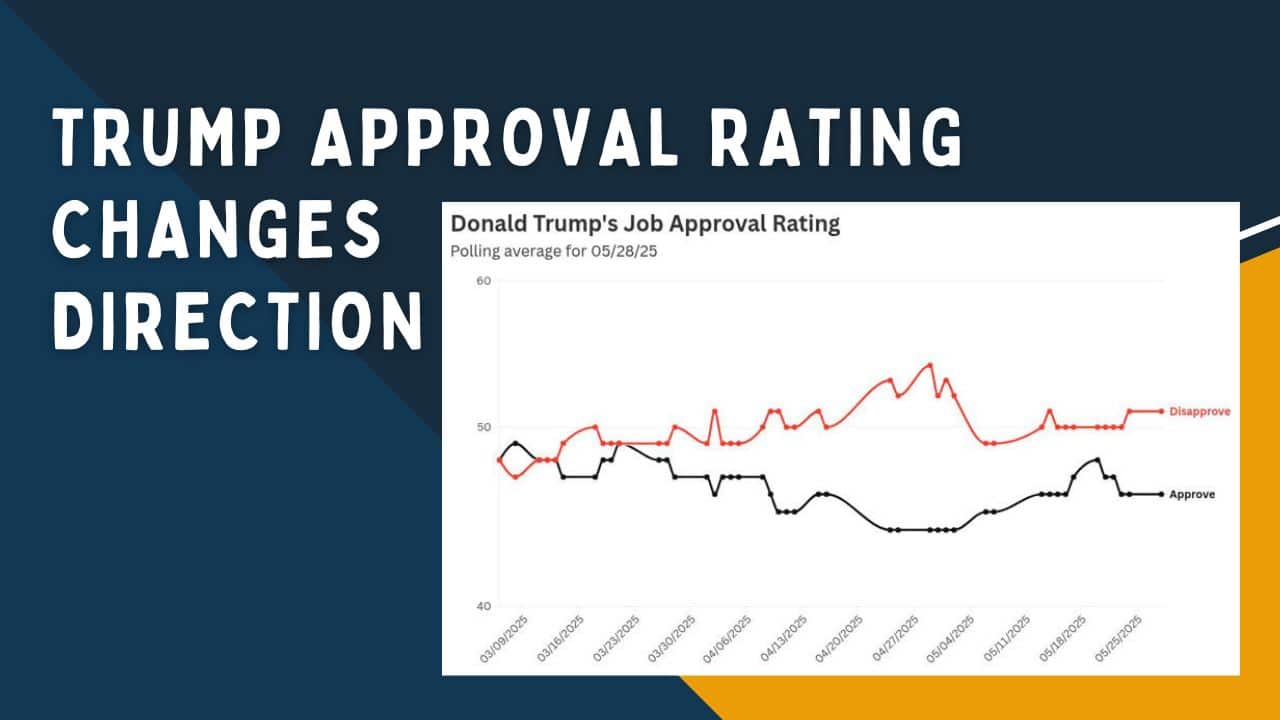
Let’s do something unusual: picture yourself scrolling through headlines and pausing at the phrase Trump approval rating changes direction. You wonder, “What triggered that shift? Can I trust the surge or dip?” Suddenly, it’s personal. That’s the hook; Trump approval rating changes direction isn’t just polling data. It’s the pulse of a nation, and today you’re invited, yes, you are invited to feel the rhythm, examine the tremors, and question what lies beneath.
1. The Story Behind the Shift
It starts simply. A poll shows a subtle uptick or downturn, and suddenly, newsfeeds flash that Trump’s approval rating is changing direction. Headlines amplify it, commentators weigh in, and you feel tugged toward agreement or skepticism. But behind that overlay of red and blue graphs, there’s an entire story: timing, events, media narratives, and shifting emotions.
Here’s the twist: Trump approval rating changes direction doesn’t happen in a vacuum. Every statistical wobble reflects complex forces economy, global headlines, a heated statement, or even a viral clip. And then the cycle starts again.
2. The Mechanics of Movement
You might ask: How fragile is public approval? Not very. One dramatic week can push numbers. Again, we see the direction when inflation headlines jump, trade deal news hits, or an emotional speech lands. Pollsters chase sentiment, then analysts chase pollsters, and suddenly every news alert is dancing to the same tune.
So the mechanics look like this:
- Trigger event: A policy announcement, drama on social media, or an economic statistic.
- Reaction: The Media covers it. People watch, talk, retweet.
- Poll response: A number shifts.
- New headlines: They broadcast the same and rinse and repeat.
3. A Timeline of Tensions and Returns
Let’s imagine a timeline. A policy statement hits on day one. By day three, pundits say that Trump’s approval rating will change its direction. Polls on day five confirm. By day ten, a fresh scandal or economic report turns it again. That’s the human drama of polling, a narrative that unfolds in tight, emotional sequences.
This isn’t random. Emotions create waves. Surprise, fear, hope… they all flick a switch in collective thinking. That’s when such things become more human than statistical.
4. Why “Changes Direction” Feels So Dramatic
Ask yourself: why do we lean in when we hear Trump approval rating changes direction? It’s rarely about the number itself. It’s about the story behind the number, and how it relates to our lives. Approval isn’t a rigid benchmark; it’s more like a mood ring: a glimpse of how we feel, right now. And when that ring flickers, curiosity spikes.
Plus, the language is active. “Changes direction” suggests movement, unpredictability, and momentum far more compelling than “approval remains steady.” It draws you in.
5. The Role of Media and Spin
The media has a sharp edge. One group frames the shift as a comeback. The other says it’s a fluke. But both write: Trump approval rating changes direction. It’s framed as either vindication or warning, yet the same phrase anchors the narrative. You don’t just see numbers, but you also read consequences.
Notice how the repetition of “changes direction” in a headline feels urgent. Just enough to make you pause, lean in, and question: Are we really seeing a long-term trend or just a moment?
6. Polling Nuances Nobody Mentions
Polling is messy. Margins of error blur the lines. Suppose approval was 45 percent, and then a poll shows 47 or 43. Technically, this might land inside the margin. Yet we still suffer through headline drama: Trump’s approval rating changes direction. In truth, we shouldn’t overreact. Still, nearly every swing, even a small one, gets dramatized.
That’s why understanding margins, methodology, and sample size matters. But let’s admit it: Trump approval rating changes direction sells better than “within margin of error.”
7. Historical Swings: Stories of Up and Down
Historical context is telling. Over the past years, approval has ebbed and flowed around key events: election cycles, impeachment hearings, and pandemic responses. Again and again, we read about this rating change in direction. But often these shifts reflect short-term reactions, not deep-seated shifts.
Remember mid-term elections or judicial rulings? All were tied to headlines that read so, and then numbers flickered.
8. The Psychology of Swinging Numbers
Here’s the kicker: we humans crave drama. Emotional swings in approval feel alive, immediate. So, when Trump approval rating changes direction, we subconsciously lean in because something’s happening, not just numbers, but narrative. Whether we agree or not, it matters because we feel it.
Even if it later weakens or reverses, we remember the moment of the shift because what feels dramatic sticks.
9. Can Directional Change Predict Policy Shifts?
Let’s say consistently, you see that Trump’s approval rating is changing direction upward for several weeks. Could that motivate a more aggressive policy push? Possibly. A leader takes momentum, reads public mood, and responds. Conversely, falling approval might pull back bold initiatives.
Here’s the interplay: polls inform perception, perception influences leadership. It’s a feedback loop. And every time there’s a turn, we say, yes once more: Trump approval rating changes direction.
10. Readers: How do you react?
Pause here. Reflect on your own reaction when you read that phrase. Do you lean in? Get skeptical? Change your mind or dismiss it? That’s the human element. You’re not just a data consumer; you’re the audience, interpreter, drama participant.
Recognizing that gives us richer insight than any graph.
11. The Risk of Over-Reaction
Because “changes direction” is clickities, you know, framed to flare, you might overreact. Small statistical fluctuation becomes front-page drama. Then, next week, flip again. We end up fatigued, numb, and skeptical. Yet the cycle resumes, and we still lean in because we fear missing something.
Be aware. Let stories draw you, but keep perspective.
12. Sustained Trends vs Fleeting Blips
If Trump approval rating changes direction across multiple polls in the same direction, that feels real. But when it flips back quickly, we question the meaning. Short-term change is noise; sustained change is message. As readers, bridging between noise and message is key, and still, we’ll click when we see “changes direction.”
13. Language Shapes Belief
The wording matters. “Changes direction” feels active, kinetic. If instead: “modest fluctuation” or “no significant movement”. It wouldn’t engage. Copyrighting that phrase makes it powerful. Repetition gives it punch. And when you read it the seventh or eighth time, you feel you must examine or push back.
14. What’s Next? Watching the Patterns
So, where do we go from here? Track the narrative. Look for consistency. And when you see Trump approval rating changes direction, pause. Check the magnitude, sample size, and context. It’s not just a moment; it’s a clue.
Are we in a swing state of opinion? Or just another click-driven surge?
Conclusion
Across events, headlines, polls, and sentiment, Trump’s approval rating changes direction and becomes more than data. It’s a mirror held up to uncertainty, media framing, and emotion. Every time we read it, we respond: curious, anxious, skeptical, and hopeful. So let’s treat that phrase not as headline fuel but as an invitation to look deeper.
You’ve been part of that deeper look. Now, keep asking: what truly lies beneath the shifts, beyond the phrase?
Frequently Asked Questions
1. What usually sparks a sudden Trump approval rating changes direction moment?
It’s rarely just one thing. Sometimes it’s a fiery speech, other times a breaking news story or a surprise policy move. Even a small gaffe or a powerful photo can shift how people feel almost overnight.
2. Can we really trust every headline claiming Trump’s approval rating changes direction?
Not always. Headlines are built to grab your attention, and a tiny change within the poll’s margin of error can still make big news. The real test is whether several polls tell the same story.
3. Does a steady climb in approval ratings always mean the change will last?
No. Even if it happens for weeks in the same direction, a single major event, good or bad, can swing it back. Public opinion is rarely set in stone.
4. How much influence does a phrase like Trump’s approval rating change direction have on the public?
More than most people think. The words feel urgent and in motion, which can make readers believe something big has happened even if the actual numbers are small.
5. What’s the smartest way to figure out if a shift is the real deal or just background noise?
Check the details: sample size, who was polled, how the questions were asked, and whether other polls are seeing the same trend. A single number doesn’t tell the whole story.
6. Can one lone poll showing Trump approval rating changes direction be misleading?
Absolutely. That one poll could be an outlier, reflecting temporary moods or quirks in the data. A pattern across several polls is much more reliable.
7. Do world events really move approval ratings that much?
They can. Trade deals, global conflicts, and climate decisions, any of these can spark a quick emotional response that makes Trump’s approval rating changes direction almost instantly.
8. Why do news outlets repeat the phrase so often?
Because it works. “Changes direction” sounds active, dramatic, and a little unpredictable. It pulls readers in, whether the change is significant or not.
9. Are approval shifts more powerful during election season?
Without a doubt. When campaigns are in full swing, even a one- or two-point shift can alter strategies, influence undecided voters, and shape the media’s tone.
10. What part does social media play when Trump approval rating changes direction?
A huge one. Social platforms can take a small poll change and turn it into a viral talking point, often adding emotional spin that magnifies the impact far beyond the raw numbers.
Don't Miss