

The manufacturing world has quietly gone through a major shift over the past few years. Buyers who once relied on a handful of regional suppliers now source parts from specialized manufacturers across continents, comparing tolerances, lead times, and material certifications before placing an order. Two processes sit at the center of this shift: aluminum extrusion and CNC machining. Together, they form the backbone of everything from consumer electronics enclosures to structural components used in construction and automotive assembly.
Why Aluminum Profiles Remain the Material of Choice

Aluminum has held its position as a go-to industrial material for decades, and 2026 is proving to be no exception. Its combination of low weight, corrosion resistance, and strength-to-weight ratio makes it suitable for applications ranging from window and door systems to aerospace interiors and EV battery housings. Manufacturers are increasingly pushing toward custom cross-sectional designs rather than off-the-shelf shapes, since a well-engineered profile can eliminate secondary machining steps and cut assembly costs downstream.
China has become one of the largest hubs for this kind of production, largely because of the scale at which extrusion facilities operate there. Companies sourcing custom shapes at volume are increasingly working directly with an Aluminum Profile Manufacturer China rather than going through multiple layers of distributors, which shortens lead times and gives engineering teams more control over die design and finishing options like anodizing or powder coating.
The bigger shift, though, isn’t just about where profiles are made it’s about how quickly a design can move from CAD file to finished part. That’s where the second half of this story comes in.
CNC Machining The Bridge Between Design and Production

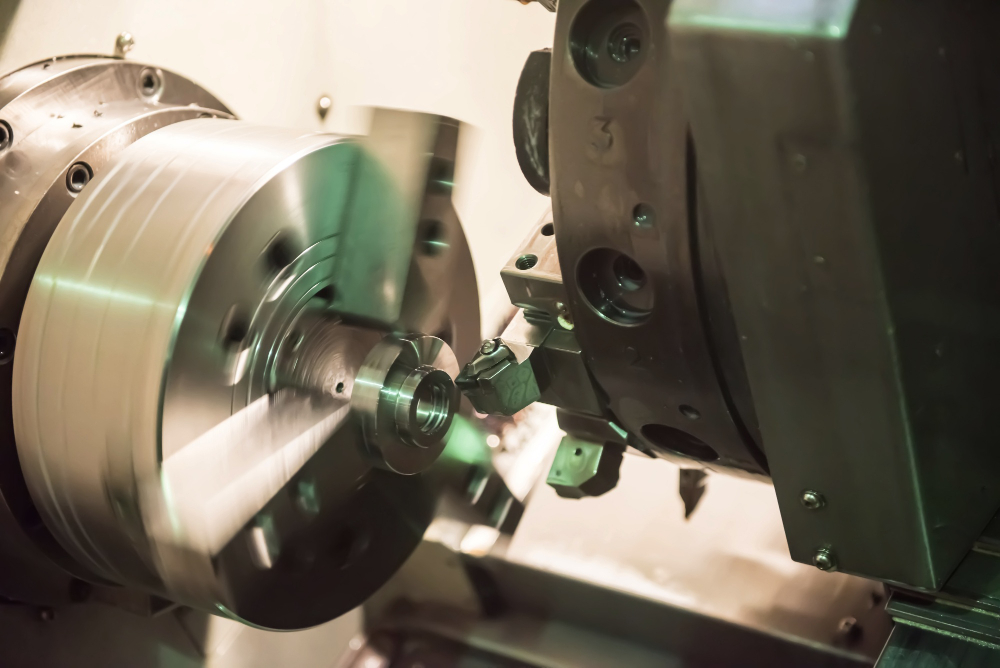
Extrusion gets you the raw profile, but most real-world components still need secondary operations drilling, tapping, milling flat surfaces, or cutting complex geometries that extrusion dies simply can’t produce. This is where CNC machining takes over. Computer-controlled mills and lathes convert a digital design into a finished part with tolerances that manual machining can’t reliably match, and they do it repeatably across thousands of units.
What’s changed recently is turnaround time. A decade ago, getting a CNC quote could take days. Now, engineering teams expect instant online quoting, DFM feedback within hours, and production runs that scale from single prototypes to thousands of units without switching suppliers. Firms offering CNC Machining China built around fast quoting and in-house quality control have become the preferred option for companies that can’t afford to wait weeks between design iterations, particularly in industries like medical devices, robotics, and automotive where a single tolerance issue can delay an entire product launch.
Where the Two Processes Meet
In practice, aluminum extrusion and CNC machining rarely operate in isolation. A typical workflow looks like this: an engineering team finalizes a cross-sectional profile, works with an extrusion partner to produce the raw stock, and then sends that stock to a CNC shop for finishing operations cutting to length, machining mounting holes, adding threaded inserts, or milling custom features that the extrusion process can’t replicate. Getting both steps right, and ideally working with suppliers who understand how the two processes interact, saves significant time and reduces the back-and-forth that often derails manufacturing timelines.
What This Means for Buyers in 2026
The market data backs up what’s happening on the ground. Industry reports project the extruded aluminum profiles market growing at roughly 7% annually through the early 2030s, driven largely by construction, transportation, and electronics demand. At the same time, automation and AI-assisted quality control are becoming standard across both extrusion and machining facilities, which means faster turnaround and tighter tolerances are no longer premium features they’re baseline expectations.
For companies sourcing parts today, the takeaway is straightforward: the old model of picking a single local supplier and sticking with them regardless of capability has largely given way to a more deliberate approach matching each stage of production, from raw profile to finished component, with a manufacturer that specializes in it. That shift is what’s quietly driving efficiency gains across the industry heading into the back half of the decade
Don't Miss