
Outdoor events, shows, and promotional activities depend on effective, eye-catching display solutions. Long-term, there have always been two industry standards: inflatable tents and conventional pop-up canopy tents. They both have specific benefits based on the type of event, branding needs, and operational needs. The new breed of trade show inflatables has also introduced a new dimension of innovation, in which lightweight structures are accompanied by loud aesthetics, while classic custom tents still offer reliability and familiarity. To decide between these two, one needs a clear idea of which performs better across critical criteria, such as setup efficiency, durability, branding potential, and long-term use. By comparing the two solutions, businesses will be able to identify which structure best fits their plans for organizing an event and achieving operational objectives.
5 Major Differences Between Inflatable Tents and Traditional Pop-Up Canopies

1. Installation Velocity and Installing Facilities.
In operations where speed is of the utmost importance, such as a tent of food vendors, setup speed becomes a defining characteristic. Tents with an inflatable design can be used very quickly and can be inflated in a few minutes; this is achieved by using electric pumping. When the structure is fully inflated, a complex assembly or multiple support elements are unnecessary to make it stable.
Conventional pop-up tents, however, rely on expandable metal frames that are manually assembled. Although modern designs have enhanced ease of use, they still entail unfolding, locking joints, and fixing the canopy. This may become even more time-consuming, especially when done by one person.
Physical effort is saved during installation with inflatable structures, which appeals to teams who want to install them easily and quickly. Access to a source of power to inflate may, however, be needed, and this limits freedom in some outdoor settings.
2. Stability and Durability of Structure.
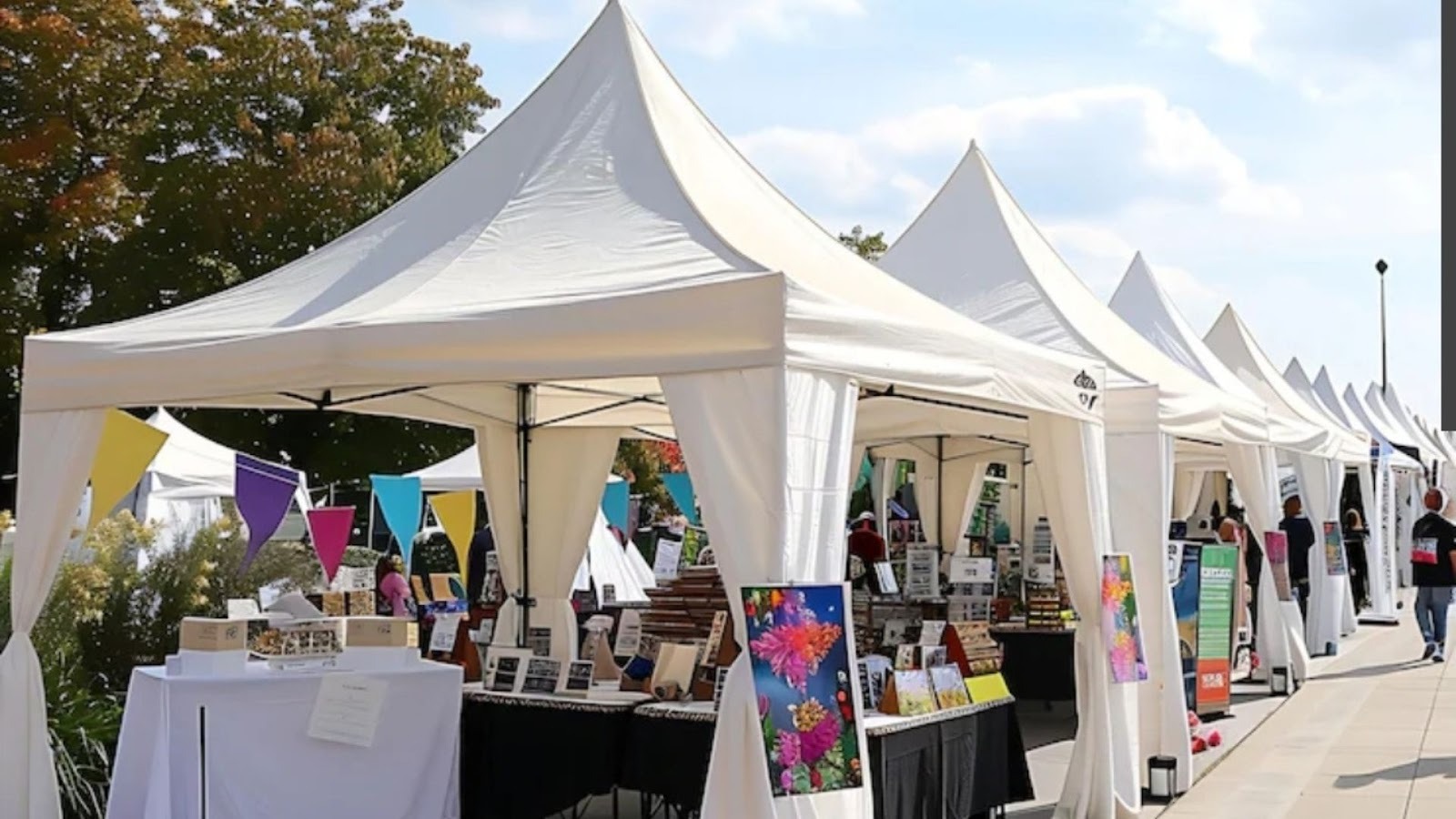
Long-term value depends on durability. The classic pop-up tents are generally made with steel or aluminum frames, which are very strong against weather conditions like wind or constant use. These rigid structures do not change shape under pressure and are suitable for events that require permanent set-ups.
Tents that use inflatable beams as opposed to solid frames. Although superior material quality makes them remarkably strong, stability can vary with air pressure and anchoring systems. Inflatable tents that are well secured should work in moderate weather conditions, though they may require additional stabilization in high-wind conditions.
The classic frames usually provide more reliability in harsh environmental conditions, whereas the inflatable alternatives are more flexible and easier to deliver. The decision will be based primarily on durability and portability.
3. Portability and Transportation Efficiency.
The portability of inflatable tents is one of their major strengths. These structures can be packed into small storage bags and moved easily without using heavy metals. This suits them for businesses that travel frequently between events or operate in more than one location.
Old-style pop-up tents, especially the steel-framed tents, are heavier and bulkier. Even though wheeled carrying cases increase mobility, they are more tedious to transport than inflatable ones.
Inflatable tents provide a solution for organizations that prioritize lightweight equipment and high mobility. Nevertheless, people who are ready to operate a bit of heavy-duty equipment might enjoy the stability of the traditional frames.
4. Branding Effect and Visual Attractiveness.
The visual aspect is one way to attract attention during crowded events. There is a tendency to have inflatable tents with uncommon shapes and smooth surfaces that can easily be branded on a large scale. Curved designs and bold structures are attractive and can therefore be used in promotional campaigns.
Having consistent brand recognition opportunities by using printed canopies and sidewalls is possible with traditional pop-up tents. Although they are more traditional, good graphics and color schemes provide a good visual effect.
The inflatable designs are more likely to provide a contemporary and appealing look, and the pop-up tents provide a traditional and business-like look. The two options are usually determined by the desire to be dramatic or to remain familiar and trusted by the visual image.
5. Economy and Investment in the Long Run.
Cost factor is also an important factor when choosing the appropriate tent solution. Traditional pop-up tents are usually cheaper (in the short run) and can be used by a company with a small budget or one that has not ventured into event marketing before.
The inflatable tents can cost more at the outset because of the sophistication of the materials used and automated inflation mechanisms. Nevertheless, they can be transported at a lower cost due to their lightweight nature and installed over time.
End Point
Each inflatable tent has unique advantages, and traditional pop-up canopies can be deemed suitable for various event needs. Inflatable designs are more portable, easy to set up, and eye-catching, whereas traditional pop-ups are durable, stable, and economical. Businesses can determine the structure most appropriate to their needs by considering factors such as ease of use, environmental considerations, branding objectives, and long-term investment. When both options are utilized strategically, they can deliver powerful performance and help create successful experiences during events.
Don't Miss