
The digital world is becoming more and more of a necessity than a luxury and identity verification is mandatory. Now that deepfakes, spoofing attacks, and advanced fraudsters are on the rise, companies are increasingly having difficulties with identifying whether a particular individual is who he says he is. Senior technologies, like passwords or basic facial recognition are no longer applicable to discouraging cybercriminals. This is the point at which liveness detection comes into the picture. Liveness detection, by identifying whether a given biometric, say a face or a fingerprint, is provided by a real human being or some sort of a false image, provides a layer of security required by an authentication system.
What Is Liveness Detection?
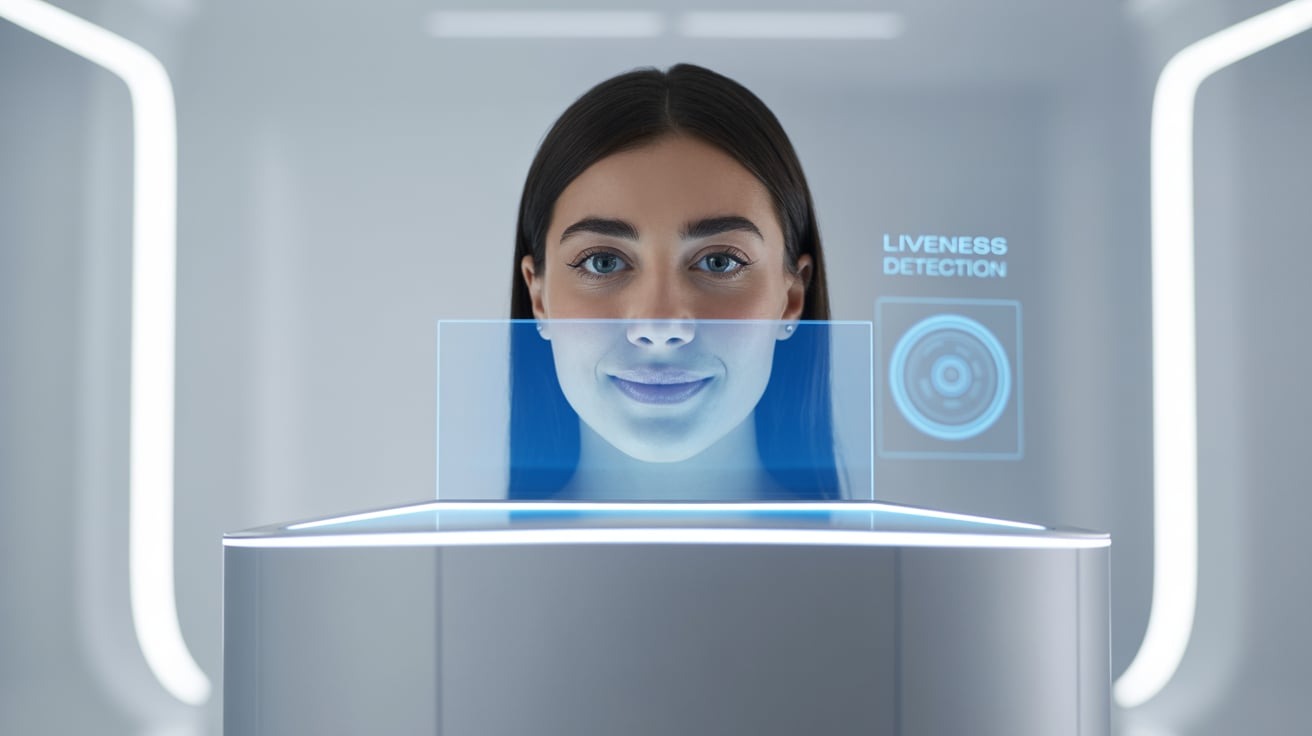
Liveness is a biometric security feature whereby a genuine person is identified as opposed to a fake person (e.g. photo, video or 3D mask). The main objective of it is to stop forged identity spoofing attacks. As an example, a cybercriminal in a facial recognition system may seek to deceive the gadget by using a printed image or a video replay. Liveness detection means that only the real, live users can manage to pass through the verification process.
This technology has the ability to scan various signals like eye movement, blinking, skin texture, or depth view. More sophisticated technology goes to the point of using artificial intelligence and machine learning to identify when micro-movements are detected and authenticate the user.
Types of Liveness Detection
Liveness detection has two primary kinds, namely, active and passive.
Active liveness detection involves user engagement, including head rotation, blinking or instructions on the screen. As much as this is a very effective method, it can be inconveniencing and disruptive to some people.
Passive liveness detection, on the other hand, is a background process. It does not involve any form of effort on the part of the user but rather involves examination of higher image and video data to verify liveness. Although it offers a smooth user experience, it applies more complicated algorithms and more powerful AI models to be accurate.
Both methods are essential in various settings and most of the contemporary systems apply them together to bring about more powerful and dependable authenticating.
The importance of Liveness Detection.
The online age has opened an unlimited opportunity to the businesses and individuals however the same has opened the gateway to fraudsters. The cases of identity theft, account takeovers, and financial crime have been on the increase worldwide costing organizations billions of dollars annually. Liveness detection is a direct solution to this dilemma since it is necessary that the authentication systems are not vulnerable to static images or video manipulation.
In the case of a financial institution, liveness detection plays an important role in adhering to regulatory obligations like Know Your Customer (KYC) and Anti-Money Laundering (AML) verification. In the case of e-commerce and online services, it minimizes frauds in the onboarding and payment procedures. And in the case of enterprises it improves security in case employees have to access sensitive information or networks of the company.
Overall, liveness detection does not only provide security to transactions, but also creates trust between businesses and their clients. Users will be more willing to use digital platforms when they are certain that their identities are not put at risk.
The mechanism behind Liveness Detection.
Liveness detection works differently in relation to the system and technology applied. With active detection the user can be requested to do a given action, like blinking or nodding and the system checks their actions. These are actions that cannot be easily duplicated with the help of the still pictures or deepfake videos.
Passive detection on the other hand involves sophisticated study of facial textures, light reflections, and depths. The system can tell the difference between a real person and an artificial one through the evaluation of the interaction of light with the skin or the appearance of a face, viewed in several different angles.
Most solutions also combine machine learning models that are trained using large volumes of data to detect even the most advanced spoofing. Liveness detection is an ever-growing technology, as the methods of cybercrime also develop.
Uses of Liveness Detection.
Liveness detection can be used in various industries. In banking, it assists in the secureness of mobile banking applications and avoiding fraudulent account setting. It is important in the medical field to have patient records that can only be accessed by authorized persons. In the travelling industry, it assists in a smooth identity check in airports and at the borders.
Moreover, liveness detection has become a necessity in companies that require verifying their staff and customers without in-person communication due to the introduction of remote working and online onboarding. This technology is also being uptaken by the gaming industry and social media sites to ensure the authentic user interaction and avoid impersonation.
The Liveness Detection with the Usage of Artificial Intelligence.
Modern liveness detection is centered on artificial intelligence. Machine learning can process intricate biometric data, and also, detect subtle details that cannot be perceived by the human eye. It is because AI enables systems to keep learning the new spoofing tricks, which ensure that they become more resilient to the emerging threats.
AI-based liveness detection is not only associated with fraud prevention, but it has also advantages in the user experience. It makes sure that security is not compromised at the cost of convenience by minimizing false rejection and accelerating the payment of the checks. This safety and usability equilibrium is paramount in the contemporary digitalized world that is fast.
Difficulties with Liveness Detection.
Although it is an effective method, facial recognition has a number of challenges. Deepfakes and fake media are getting more and more realistic and it is more difficult to define the real and fake biometrics nowadays. Moreover, accessibility and equity are important to ensure that the individuals of different backgrounds are checked impartially.
The other obstacle is in user privacy. Gathering of biometric information must be carried out in line with the law of data protection and the encryption of information. To ensure that the customers place their trust in the organization, the organizations should make transparency and consent a priority.
The Future of Liveness Detection.
The future of liveness detection is bright in the face of the technological advancement. In the future, systems will be more precise and smooth as AI, 3D imaging, and behavioral biometrics will improve. Their ability to tell whether a person is real will go beyond that as they will examine their behavioral patterns to gain greater identity assurance.
The liveness detection will be part of the secure authentication as digital interactions are becoming increasingly popular. It will be very important in safeguarding business, governments, and individuals against fraud and the experience of smoother user experiences.
Conclusion
Liveness detection is one of the greatest innovations in identity verification. It is a strong defense against spoofing attacks, deepfakes, and fraudulent activities by making sure that only real and live users get access to systems. Its uses are diverse and necessary in banking and healthcare among many others. With the further development of technology, liveness detection will evolve further and allow taking the digital space more secure and reliable to all people.
Don't Miss